Everyday unmanned services are becoming more visible and relevant. In fact, some industries have become dependent on them for certain operations. Regardless of the domain, unmanned systems are more efficient, cost effective, and safe than manned systems. It’s efficiency and the exponentially increasing technology have allowed us to not only dream about unmanned space exploration, but also colonizing far-away places. There are numerous reasons for us to explore space beyond our atmosphere and it is evident that this exploration is partially dependent on outposts or colony’s. As exciting as this idea is to most people, there are others who see otherwise. An article that I found especially interesting, regarding this idea, was printed in the Science Direct Journal last June; “Colonizing other planets is a bad idea”, by Linda Billings.
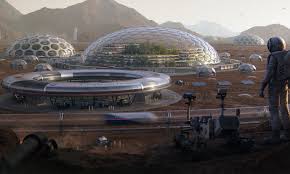
Colonizing other planets or moons provides many advantages and benefits for specific missions outside the Earth’s atmosphere. The article mentioned above doesn’t deny that; however, the author simply doesn’t believe that mankind is ready for it without fixing priorities on earth first. “My view as a social scientist is that humans are not sufficiently advanced, technologically and socially, to be establishing colonies on Mars, or any other place in space. Except for the threads of Russian cosmism, the ideology of space colonization and exploitation is largely Western and Christian,” (Billings, 2019). She sums up that the drive to reach for the stars, to explore the cosmos, to colonize in space, to search for alien lifeform, to figure out where we came from can be narrowed down to feelings of “manifest destiny” by “elitist westerners”. The article expresses that those who push the boundaries of discovery and exploration should fix all other problems prior to moving forward. Her concerns are legitimate, but I don’t believe the desire to move forward is held by the specific group named. More importantly, I can’t imagine how limited technology and advancement would be today if those dreamers spent all their efforts trying to fix every current problem prior to moving forward.
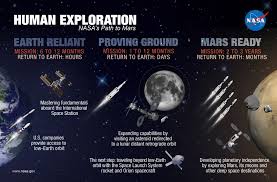
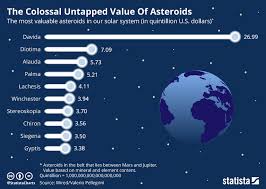
Throughout history there have always been individuals, groups, nations, etc. who continuously desire more and constantly explore. Sometimes it was driven by the need to conquer, the need for more natural resources, the need for refuge, and sometimes it was curiosity. Today the same reasons exist; however, the world is more connected and most of the livable land is claimed and being used if possible. Although we don’t know everything that our earth has to offer, the possibilities of what the solar system, or all space, has to offer is immeasurable. One thing we do know is electronic components require precious metals for production and the supply on earth is limited. “In space, they can be used to 3D print spacecraft components, enabling building and maintenance to occur in orbit”, (Anderson, Christensen, & LaManna, 2018). Keep in mind that some of the current technological advances have provided solutions to some of the older, worldly problems eluded to in this article. Another source of some of these precious metals are asteroids. Most asteroids orbit in the main asteroid belt between Mars and Jupiter. Near-Earth asteroids (NEAs) orbit relatively close to Earth and 18,000 have been discovered and documented, (Anderson, Christensen, & LaManna, 2018). The desire to explore space is too costly to stage everything from earth. Mars would be an ideal supply and maintenance post because it is nearest the asteroid belt and prior to the gas giant planets.
Space exploration and colonization is extremely expensive, so it is easy to see why it takes a well-established government program or entrepreneurs such as Sir Richard Branson, Elon Musk, and Paul Allen to finance these massive projects. “Lots of people think of space in a kind of ‘space race’ model, but these days it’s much more collaborative,” (Jao, 2014). Although there are always consequences or fallout, technology is critical. Without it, we would have no idea how big the resulting consequences were (e.g. global warming). Whether it is planets or moons, I believe that colonizing is a necessary if we want to move forward with our understanding of our universe and pursue the limits of technology.
References:
Anderson, S., Christensen, K., & LaManna, J. (2018). The development of natural resources in outer space. Journal of Energy & Natural Resources Law. 37(2), 227-258. Retrieved from https://doi-org.ezproxy.libproxy.db.erau.edu/10.1080/02646811.2018.1507343
Billings, L. (2019). Colonizing other planets is a bad idea. Science Direct.110(1), 44-46. Retrieved from https://doi.org/10.1016/j.futures.2019.02.020
Jao, C. (2014). Space Travel: Meet the Entrepreneurs at the Forefront of the Space Race. Entrepreneur. Retrieved from https://www.entrepreneur.com/article/237409
 Unmanned Vehicles: Exploring all Frontiers