Be yourself; Everyone else is already taken.
— Oscar Wilde.
This is the first post on my new blog. I’m just getting this new blog going, so stay tuned for more. Subscribe below to get notified when I post new updates.
Unmanned Vehicles: Exploring all Frontiers
UAV Unmanned Vehicles Autonomous AV drone
Be yourself; Everyone else is already taken.
— Oscar Wilde.
This is the first post on my new blog. I’m just getting this new blog going, so stay tuned for more. Subscribe below to get notified when I post new updates.
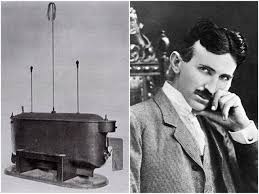
Starting with Nikola Tesla’s invention of a radio-controlled boat in 1898 to the modern unmanned vehicles today that operate in space, in the air, in the oceans, and on the ground, unmanned systems rise to a $100+ billion industry is nothing short of stunning, (Desjardins, 2016). This tremendous growth has brought amazing applications and awe-inspiring images; from the ability to map the deepest parts of the ocean to images and information of the universe that help support theories that were developed over the last couple thousand years. Although these results and immediate success have created multiple unintentional complicated situations and concerns, through regulation and innovation most platforms have prospered and are meeting these challenges head on.
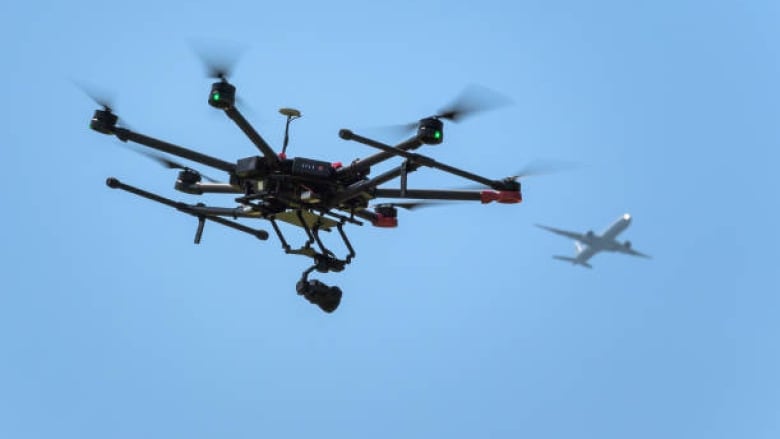
Probably the most widely used and controversial (with regards to privacy and safety) application is aerial photography, monitoring and inspection. Prior to unmanned aerial vehicles (UAVs), aerial photography, monitoring, and inspection was performed primarily by airplanes, satellites, and helicopters. Anybody who has paid to use one of these methods knows that it can be extremely expensive. Early in this century UAV technology was advancing to the point where small UAVs were gaining interest by hobbyist. They finally had the ability to fly around their neighborhoods, places of impressive beauty, and outdoor sporting events (skiing, surfing, mountain biking, etc.) and take pictures and/or video for a very reasonable price, and the hobbyist were entirely in control of the product. Many people quickly recognized that there was money to be made with this new technology and the commercial drone industry was born. In 2006, the Federal Aviation Administration (FAA) recognized the potential of non-military, non-consumer drone applications and issued the first commercial drone permits, (Dormehl, 2018). With the development of wifi capabilities, increased battery life, 3D mapping, obstacle avoidance, and many other technologies, the markets impacted by aerial photography continues to grow. Some of the areas of work benefitting from commercial drone technology are mentioned in the following picture.

Initially, the regulations were few and not a primary concern, because the drone’s abilities were limited and the relatively small number of drones used were not considered a threat. One thing to consider; the first drones didn’t have the capacity to use a camera, therefore there was a lag in time when the general public realized that their privacy could be compromised by the innocent drone flying outside there house, business, or guarded operation. Resulting from the safety and privacy issues, the FAA grounded all commercial drones in 2012. Their immediate answer to this was the FAA Modernization and Reform Act of 2012 which established their Unmanned Aircraft Systems Integration Office. Congress had tasked the FAA with integrating unmanned aerial systems into the national airspace by September 2015, (Luppicini & So, 2016). During this time drones were ungrounded with more restrictions but concerns still existed. An Australian woman complained that a drone captured her sunbathing topless and the resulting photograph appeared in an ad for a real estate company, (Matyszczyk, 2014). “A White House radar system designed to detect flying objects like planes, missiles, and large drones failed to pick up a small drone that crashed into a tree on the South Lawn early Monday morning,” (Schmidt & Shear, 2015). These are just a couple of examples that took place during this time of transition to higher regulation.
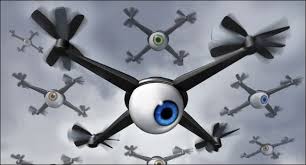
On Tuesday, June 21st, 2016, the FAA released Part 107 which provided a certificate as well as operating rules for drone operators who do not fall into recreational drone operations. Some of the rules included are maximum groundspeed, maximum altitude, operations in different types of airspace, responsibilities of pilot in command, and the list goes on, (“Ultimate Guide,” 2020). With these regulations, the drone industry has become more innovative and the commercial drone users have complied, therefore mitigating the primary concerns at this time. To further help this cause, the FAA is looking to launch a nationwide system to track drones (over 250 grams) in the sky in real-time, as well as connected pilot ID’s, (Mogg, 2019). The story of commercial drone use for aerial photography, monitoring, and inspection is beyond success; it was only a dream until the turn of the 20th century. With its unlimited possibilities, the entire world will benefit. “At the end of the day, the impact of commercial drones could be $82 billion and a 100,000 job boost to the U.S. economy by 2025,” (Desjardins, 2016).
References
Desjardins, J. (2016, December 15). Here’s how commercial drones grew out of the battlefield. Business Insider.Retrieved from https://www.businessinsider.com/a-history-of-commercial-drones-2016-12
Dormehl, L. (2018, September 11). The history of drones in 10 milestones. Digital Trends. Retrieved from https://www.digitaltrends.com/cool-tech/history-of-drones/
Luppicini, R., & So, A. (2016). A technoethical review of commercial drone use in the context of governance, ethics, and privacy. Technology in Society, 46(2016), 109-119.
Matyszczyk, C. (2014, November 17). Peeping drone captures woman sunbathing topless. CNET. Retrieved from https://www.cnet.com/news/peeping-drone-captures-woman-sunbathing-topless/
Mogg, T. (2019, December 2019). FAA proposes nationwide real-time tracking system for all drones. Digital Trends. Retrieved from https://www.digitaltrends.com/cool-tech/faa-proposes-nationwide-real-time-tracking-system-for-all-drones/
Schmidt, M., & Shear, D. (2015, January 26). A Drone, Too Small for Radar to Detect, Rattles the White House. New York Times. Retrieved from https://www.nytimes.com/2015/01/27/us/white-house-drone.html
Ultimate Guide to FAA’s Part 107 (14 CFR Part 107). (2020, January 17). Rupprecht Law. Retrieved from https://jrupprechtlaw.com/faa-part-107/
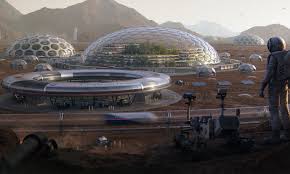
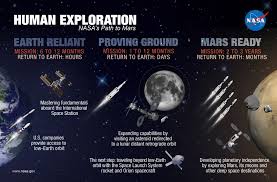
Everyday unmanned services are becoming more visible and relevant. In fact, some industries have become dependent on them for certain operations. Regardless of the domain, unmanned systems are more efficient, cost effective, and safe than manned systems. It’s efficiency and the exponentially increasing technology have allowed us to not only dream about unmanned space exploration, but also colonizing far-away places. There are numerous reasons for us to explore space beyond our atmosphere and it is evident that this exploration is partially dependent on outposts or colony’s. As exciting as this idea is to most people, there are others who see otherwise. An article that I found especially interesting, regarding this idea, was printed in the Science Direct Journal last June; “Colonizing other planets is a bad idea”, by Linda Billings.
Colonizing other planets or moons provides many advantages and benefits for specific missions outside the Earth’s atmosphere. The article mentioned above doesn’t deny that; however, the author simply doesn’t believe that mankind is ready for it without fixing priorities on earth first. “My view as a social scientist is that humans are not sufficiently advanced, technologically and socially, to be establishing colonies on Mars, or any other place in space. Except for the threads of Russian cosmism, the ideology of space colonization and exploitation is largely Western and Christian,” (Billings, 2019). She sums up that the drive to reach for the stars, to explore the cosmos, to colonize in space, to search for alien lifeform, to figure out where we came from can be narrowed down to feelings of “manifest destiny” by “elitist westerners”. The article expresses that those who push the boundaries of discovery and exploration should fix all other problems prior to moving forward. Her concerns are legitimate, but I don’t believe the desire to move forward is held by the specific group named. More importantly, I can’t imagine how limited technology and advancement would be today if those dreamers spent all their efforts trying to fix every current problem prior to moving forward.
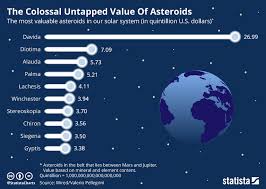
Throughout history there have always been individuals, groups, nations, etc. who continuously desire more and constantly explore. Sometimes it was driven by the need to conquer, the need for more natural resources, the need for refuge, and sometimes it was curiosity. Today the same reasons exist; however, the world is more connected and most of the livable land is claimed and being used if possible. Although we don’t know everything that our earth has to offer, the possibilities of what the solar system, or all space, has to offer is immeasurable. One thing we do know is electronic components require precious metals for production and the supply on earth is limited. “In space, they can be used to 3D print spacecraft components, enabling building and maintenance to occur in orbit”, (Anderson, Christensen, & LaManna, 2018). Keep in mind that some of the current technological advances have provided solutions to some of the older, worldly problems eluded to in this article. Another source of some of these precious metals are asteroids. Most asteroids orbit in the main asteroid belt between Mars and Jupiter. Near-Earth asteroids (NEAs) orbit relatively close to Earth and 18,000 have been discovered and documented, (Anderson, Christensen, & LaManna, 2018). The desire to explore space is too costly to stage everything from earth. Mars would be an ideal supply and maintenance post because it is nearest the asteroid belt and prior to the gas giant planets.
Space exploration and colonization is extremely expensive, so it is easy to see why it takes a well-established government program or entrepreneurs such as Sir Richard Branson, Elon Musk, and Paul Allen to finance these massive projects. “Lots of people think of space in a kind of ‘space race’ model, but these days it’s much more collaborative,” (Jao, 2014). Although there are always consequences or fallout, technology is critical. Without it, we would have no idea how big the resulting consequences were (e.g. global warming). Whether it is planets or moons, I believe that colonizing is a necessary if we want to move forward with our understanding of our universe and pursue the limits of technology.
References:
Anderson, S., Christensen, K., & LaManna, J. (2018). The development of natural resources in outer space. Journal of Energy & Natural Resources Law. 37(2), 227-258. Retrieved from https://doi-org.ezproxy.libproxy.db.erau.edu/10.1080/02646811.2018.1507343
Billings, L. (2019). Colonizing other planets is a bad idea. Science Direct.110(1), 44-46. Retrieved from https://doi.org/10.1016/j.futures.2019.02.020
Jao, C. (2014). Space Travel: Meet the Entrepreneurs at the Forefront of the Space Race. Entrepreneur. Retrieved from https://www.entrepreneur.com/article/237409

The worlds vast oceans have provided for all living things since the beginning of time. For thousands of years they have been looked to as a source of food, a highway to trade, a vehicle to fight wars, and an opportunity to discover new lands. Although they have been exploited throughout time, only in recent history have we realized our negative impact and the possible consequences. The development and advancement of technology has “opened the eyes of the world”. All efforts forward are impacted by the present environmental conscience of the world and a continuous will to explore all options the oceans have to offer. As technology evolves quickly a collaboration of unmanned and manned vehicles, scientists, private companies, different militaries and government agencies, and the general population have the ability and are monitoring, sampling and mapping the oceans. “A new strategic alliance wants to harness all of that data to slash maritime industry’s carbon emissions and increase its efficiency by 2050,” (Lystra, 2019). Driven by this information, present and future unmanned maritime systems are designed to minimize or remove the negative environmental impact.
Our world oceans produce more than 50% of the world’s oxygen, stores more than 50 times more carbon dioxide than our atmosphere, regulates our climate, provides recreation, food, ingredients for medicine, and many other things, (“Why should we,” 2019). It also represents an estimated $1.5 trillion in global value added, yearly (“Mapping Ocean Wealth,” 2019). Our dependence is obvious and modern technology and techniques have allowed us to get a better understanding of what can be done to reduce harmful impact. Although we receive ocean data from seafaring ships, satellites, and sensor mounted buoys, many organizations have employed the use of ocean and wave gliders to expedite the process.
“The Wave Glider revolutionizes how we explore and understand the world’s oceans by gathering data in ways or locations previously too costly or challenging to operate. Powered by wave and solar energy, the Wave Glider is an autonomous, unmanned surface vehicle (USV) that operates individually or in fleets delivering real-time data for up to a year with no fuel.”
“Reimagine Ocean Monitoring,” (2019)

They provide us information on ocean temperature, salinity, currents, chlorophyll fluorescence, depth, acidification, amount of trash, and noise pollution to name a few, (“Autonomous Surface Vehicles,” 2019). This massive amount of new data is being made accessible to figure how maritime industries and vehicles can be more environmentally friendly.
“If the maritime industry were a country, it would be the sixth largest emitter of climate-warming gases in the world. Increasing shipping efficiencies — which would make the maritime trades vastly more profitable — could reduce those emissions by 20 percent”, (Lystra, 2019). Although it could, it would need a huge push by governments. “CO2 emissions from shipping are forecast to increase by 50% by 2050 as international shipping has not been included in any international agreement for combatting climate change, such as the Kyoto Protocol or the Paris Agreement,” (Christodoulou, Gonzales-Aregall, Linde, Vierth, & Cullinane, 2019). With over 50,000 ships in the merchant fleet today (“Number of ships,” 2019), and most of them built on old technology and using old technology, there is a dire need to transition. The maritime industry is beginning to use more efficient boat designs, more efficient propellers, liquified natural gas for fuel, current software programs designed for automation and efficiency, solar energy, and wind energy to soften their environmental footprint. Although new practices and designs are slowly being applied to merchant and military ships, they were built-in to all unmanned maritime systems.
Unmanned maritime systems are the future of the maritime industry because of their efficiency and eco-friendly impact on the world. As continuous data collection, from all upgraded maritime vessels, is uplinked to a cloud accessible by all vessels (in the biggest picture), the entire operation will be more fluid and efficient. The biggest problem moving forward is connectivity and interaction amongst the vessels dependent on the information.
References:
Autonomous Surface Vehicles; Developing new platforms for carbon measurements. (2019, December). PMEL Carbon Program. Retrieved from https://www.pmel.noaa.gov/co2/story/Autonomous+Surface+Vehicles
Christodoulou, A., Gonzalez-Aregall, M., Linde, T., Vierth, I., & Cullinane, K. (2019). Targeting the reduction of shipping emissions to air: A global review and taxonomy of policies, incentives and measures. Maritime Business Review. Retrieved from https://www.emerald.com/insight/content/doi/10.1108/MABR-08-2018-0030/full/html
Lystra, T. (2019). Sea change: Maritime and tech leaders join forces to find innovative uses for ocean data. GeekWire.Retrieved from https://www.geekwire.com/2019/sea-change-maritime-tech-leaders-join-forces-find-innovative-uses-ocean-data/
Mapping Ocean Wealth; Understanding the value of our ocean. (2019, November). The Nature Conservancy.Retrieved from https://www.nature.org/en-us/what-we-do/our-priorities/protect-water-and-land/land-and-water-stories/mapping-ocean-wealth-1/
Number of ships in the world merchant fleet as of January 1. 2019, by type. (2019, January). Statista. Retrieved from https://www.statista.com=7/statistics/264024/number-of-merchant-ships-worldwide-by-type/
Reimagine Ocean Monitoring and Operations. Unmanned Robots Powered by Nature. (2019, December). Liquid Robotics. Retrieved from https://www.liquid-robotics.com/wave-glider/overview/
Why should we care about the ocean? (2019, November). National Ocean and Atmospheric Administration. Retrieved from https://oceanservice.noaa.gov/facts/why-care-about-ocean.html
This is an example post, originally published as part of Blogging University. Enroll in one of our ten programs, and start your blog right.
You’re going to publish a post today. Don’t worry about how your blog looks. Don’t worry if you haven’t given it a name yet, or you’re feeling overwhelmed. Just click the “New Post” button, and tell us why you’re here.
Why do this?
The post can be short or long, a personal intro to your life or a bloggy mission statement, a manifesto for the future or a simple outline of your the types of things you hope to publish.
To help you get started, here are a few questions:
You’re not locked into any of this; one of the wonderful things about blogs is how they constantly evolve as we learn, grow, and interact with one another — but it’s good to know where and why you started, and articulating your goals may just give you a few other post ideas.
Can’t think how to get started? Just write the first thing that pops into your head. Anne Lamott, author of a book on writing we love, says that you need to give yourself permission to write a “crappy first draft”. Anne makes a great point — just start writing, and worry about editing it later.
When you’re ready to publish, give your post three to five tags that describe your blog’s focus — writing, photography, fiction, parenting, food, cars, movies, sports, whatever. These tags will help others who care about your topics find you in the Reader. Make sure one of the tags is “zerotohero,” so other new bloggers can find you, too.

 Unmanned Vehicles: Exploring all Frontiers